
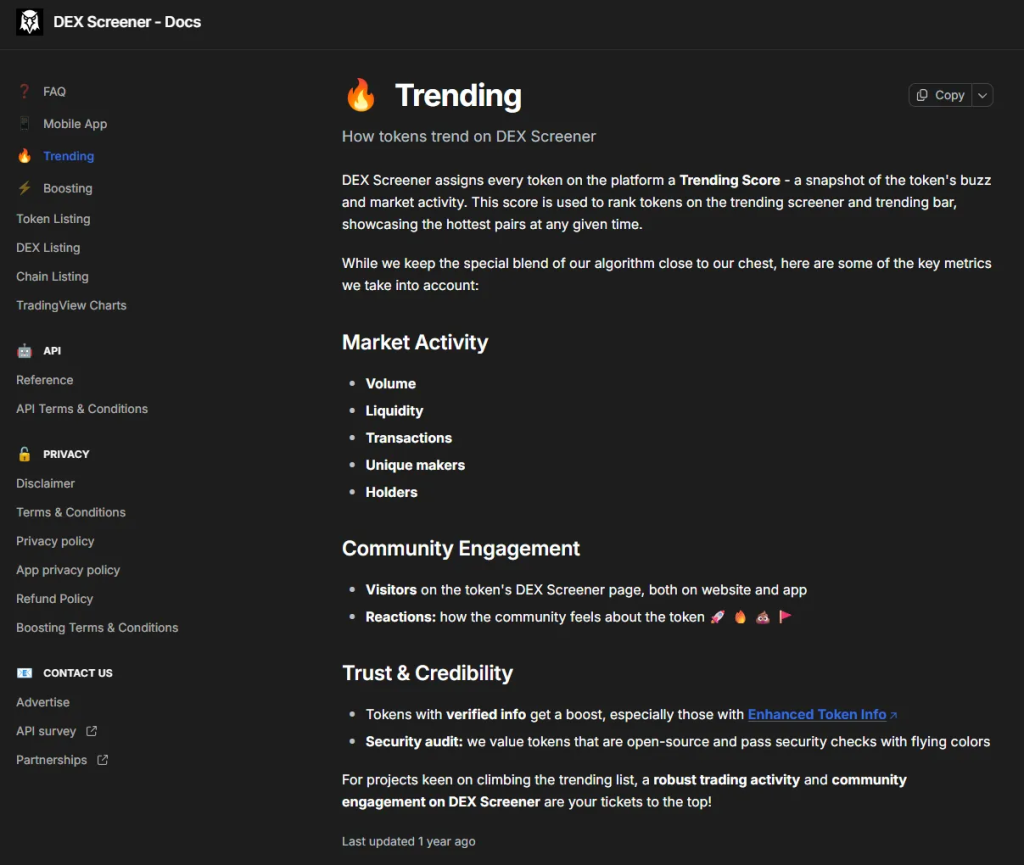
Thousands of tokens launch on BNB Chain every week. Most die in obscurity within days—not because they lack utility, but because nobody ever sees them. DexScreener’s trending page drives massive discovery traffic, yet breaking onto that list requires one thing above all else: visible trading activity.
PancakeSwap processes more volume than any other BSC decentralized exchange. For BNB Chain tokens, it’s where visibility battles are won or lost. Volume bots have become standard equipment for projects serious about competing.
Why BSC Projects Live or Die by Volume Metrics
Tracking platforms don’t rank tokens by fundamentals. They rank by measurable on-chain signals: 24-hour volume, unique trader count, transaction frequency. A token generating $40,000 daily across 180 wallets beats one showing $120,000 from 8 addresses every time.
The algorithm rewards distribution patterns that look organic. Concentrated activity from few wallets signals manipulation; distributed activity signals community interest. Smart volume generation mimics natural trading behavior.
BNB Chain adds another dimension: geographic reach. PancakeSwap maintains dominant market share across China, Korea, and Southeast Asia. Visible activity on BSC reaches investor demographics that Ethereum-based projects struggle to access.
Three Approaches to Volume Generation
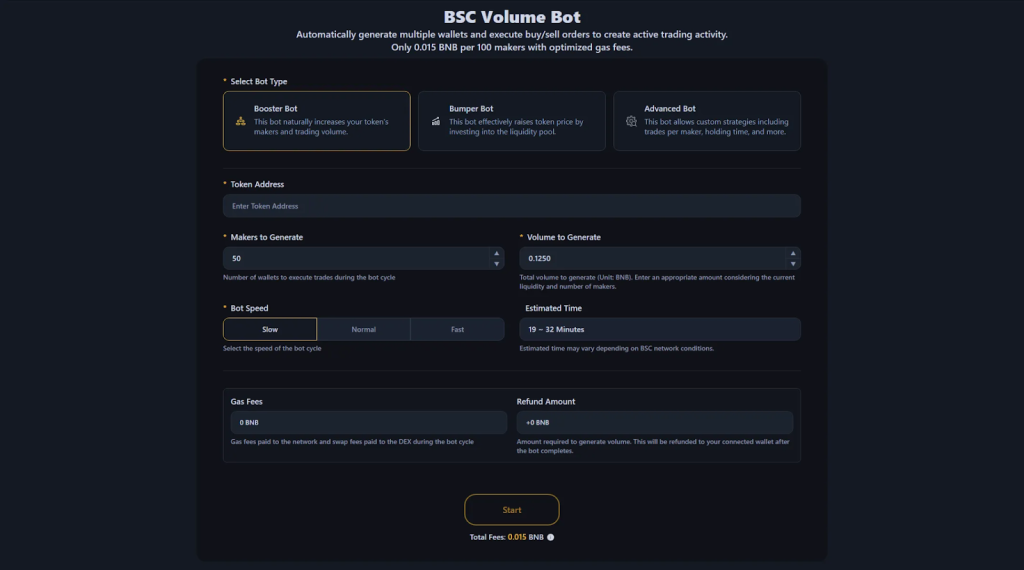
Alphecca’s PancakeSwap volume bot offers distinct modes matching different objectives.
Booster runs neutral buy-sell cycles across distributed wallets. Volume increases without directional price movement. Use this for baseline visibility maintenance or pre-listing activity demonstration.
Bumper accumulates tokens during cycles instead of selling everything back. This creates measurable upward price pressure alongside volume—useful when coordinating with announcements or engineering breakout patterns.
Advanced exposes granular controls: trade timing, individual sizes, holding periods, custom ratios. Operators who understand market microstructure can fine-tune execution to specific goals.
The Numbers That Matter
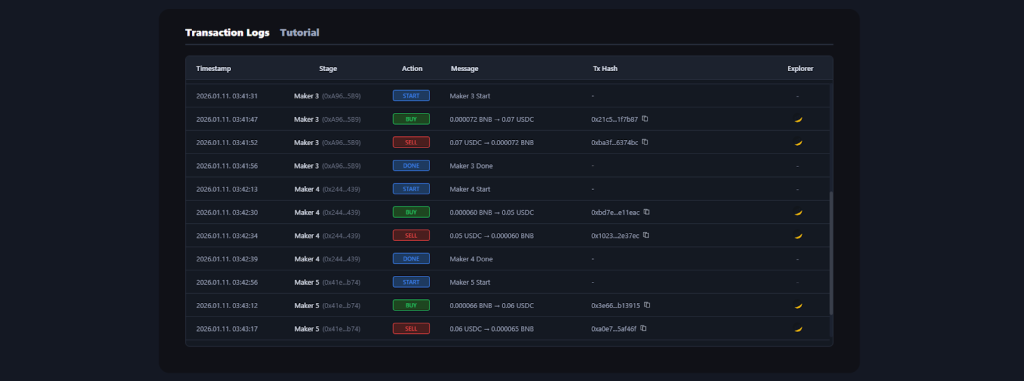
Service costs run 0.015 BNB per 100 maker wallets—flat rate regardless of volume generated. Gas consumption varies with BNB Chain network conditions but remains substantially lower than Ethereum equivalents.
Working capital cycles through trades and returns after completion. It’s float, not expense. Budget total deployment as: service fee + estimated gas + working capital reserve.
The critical constraint: individual trade sizes must stay below 3% of pool liquidity. Larger trades become MEV sandwich targets. Bots monitoring the mempool will front-run oversized transactions and extract value. The 3% threshold makes attacks unprofitable.
Execution That Avoids Detection
Tracking platforms continuously refine bot detection algorithms. Patterns that trigger filtering include uniform transaction sizes, metronomic timing, and obvious funding chains between wallets.
Effective campaigns randomize across multiple parameters. Trade sizes vary within ranges. Timing intervals fluctuate. Wallet funding follows indirect paths. The goal isn’t hiding that you’re generating volume—it’s ensuring the activity registers as valid trading rather than getting filtered from rankings.
Timing amplifies results. Volume during Asian market hours (UTC+8 morning) coincides with peak PancakeSwap activity. Weekend campaigns stand out more because baseline volume drops. Strategic timing means the same spend produces greater relative visibility.
Volume Opens Doors—Building Keeps Them Open
Bot-driven visibility creates discovery opportunities. It cannot create lasting value. Projects converting temporary attention into sustainable growth pair volume campaigns with genuine developments: product releases, partnership announcements, community milestones.
The tokens that survive treat volume generation as one marketing channel among many. Campaigns coincide with news worth amplifying. Activity levels match what organic communities might realistically produce. The story holds together under scrutiny.
Projects running perpetual bots without underlying progress eventually exhaust resources chasing metrics that don’t compound. Smart teams use volume strategically during key moments—launches, listings, major announcements—then let organic activity take over as communities grow.
Visibility gets you seen. What you’ve built determines whether anyone stays.


